We are unable to play the video for you
Due to your cookie settings, we are unable to show this video for you. You need to accept cookies for the categories Necessary and Marketing for the video to play.
Change cookie settings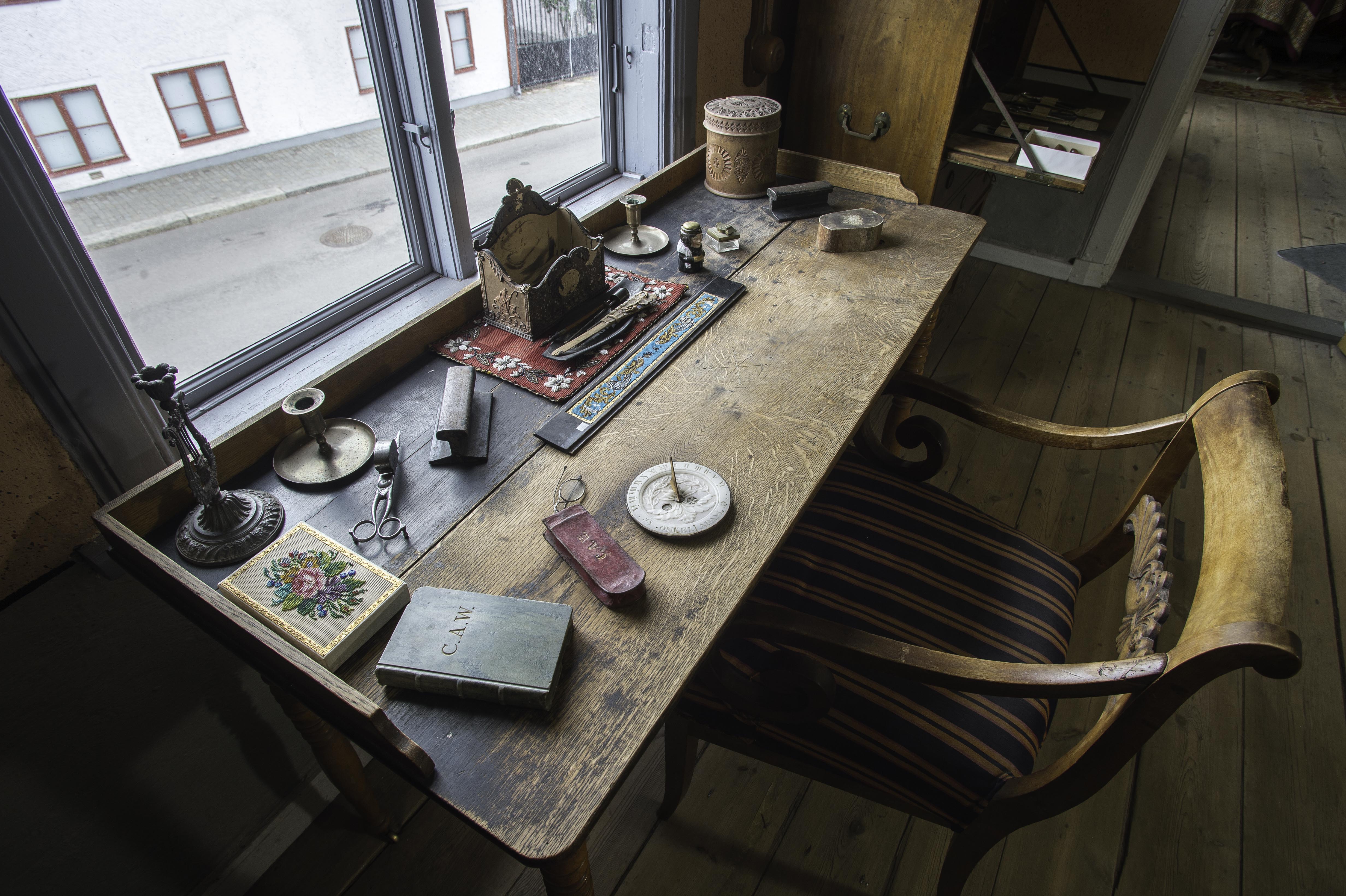
Onkel Adam
Carl Anton Wetterbergh (1804–1889) had a strong social interest. Among other things, he wrote novels and short stories that were popular in the mid-1800s. From 1862 he also published the esteemed children's magazine Linnéa.
Carl Anton Wetterbergh was married to Hedda Brydolf, a priest's daughter from Hällestad in northern Östergötland. They lived in different places in Sweden, where Carl Anton's service as a military doctor took them. In 1867, the couple moved to Hunnebergsgatan in Linköping, where Hedda's sister Adriana already lived. It was the two sisters who owned the property.
Buildings
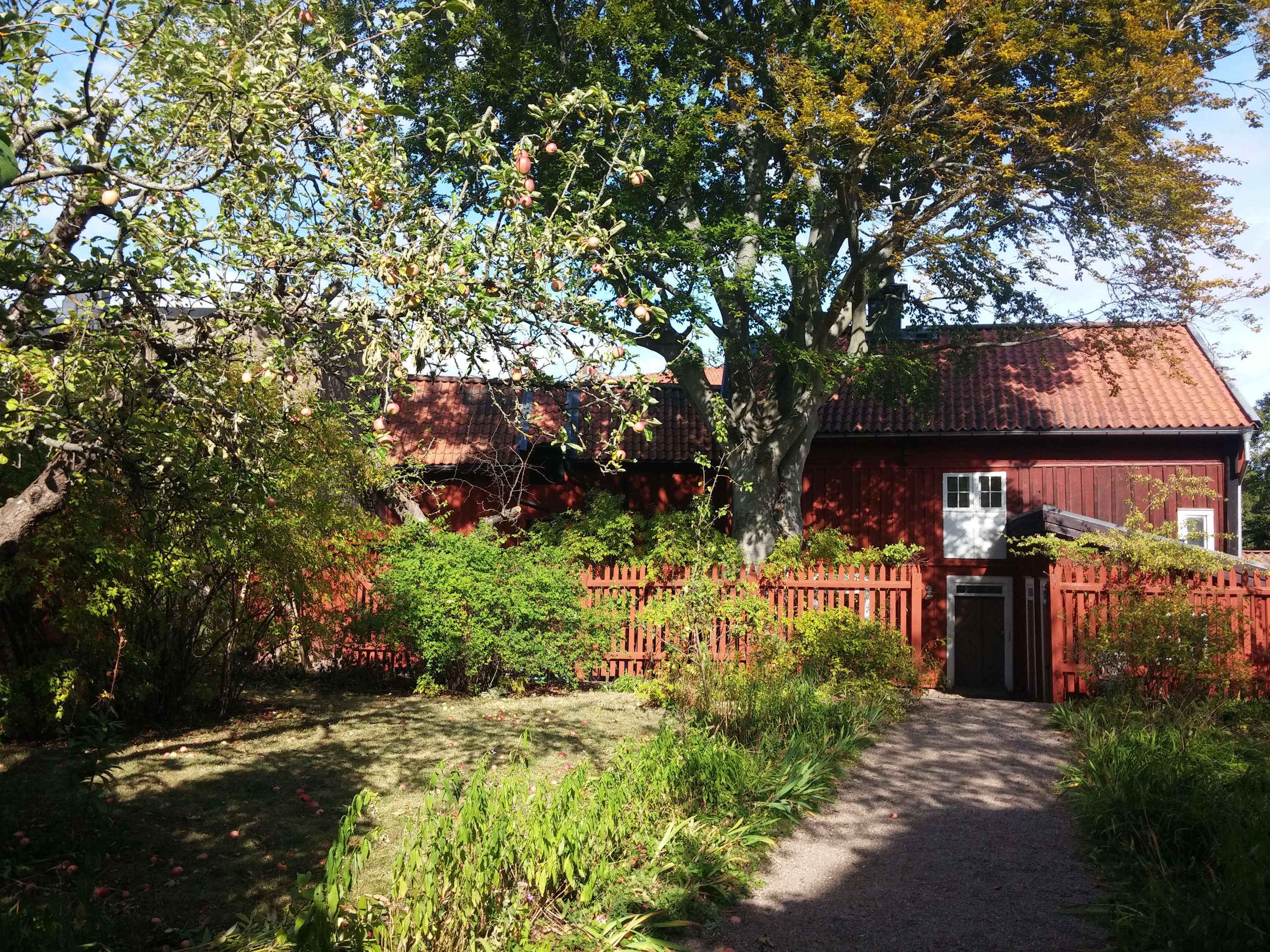
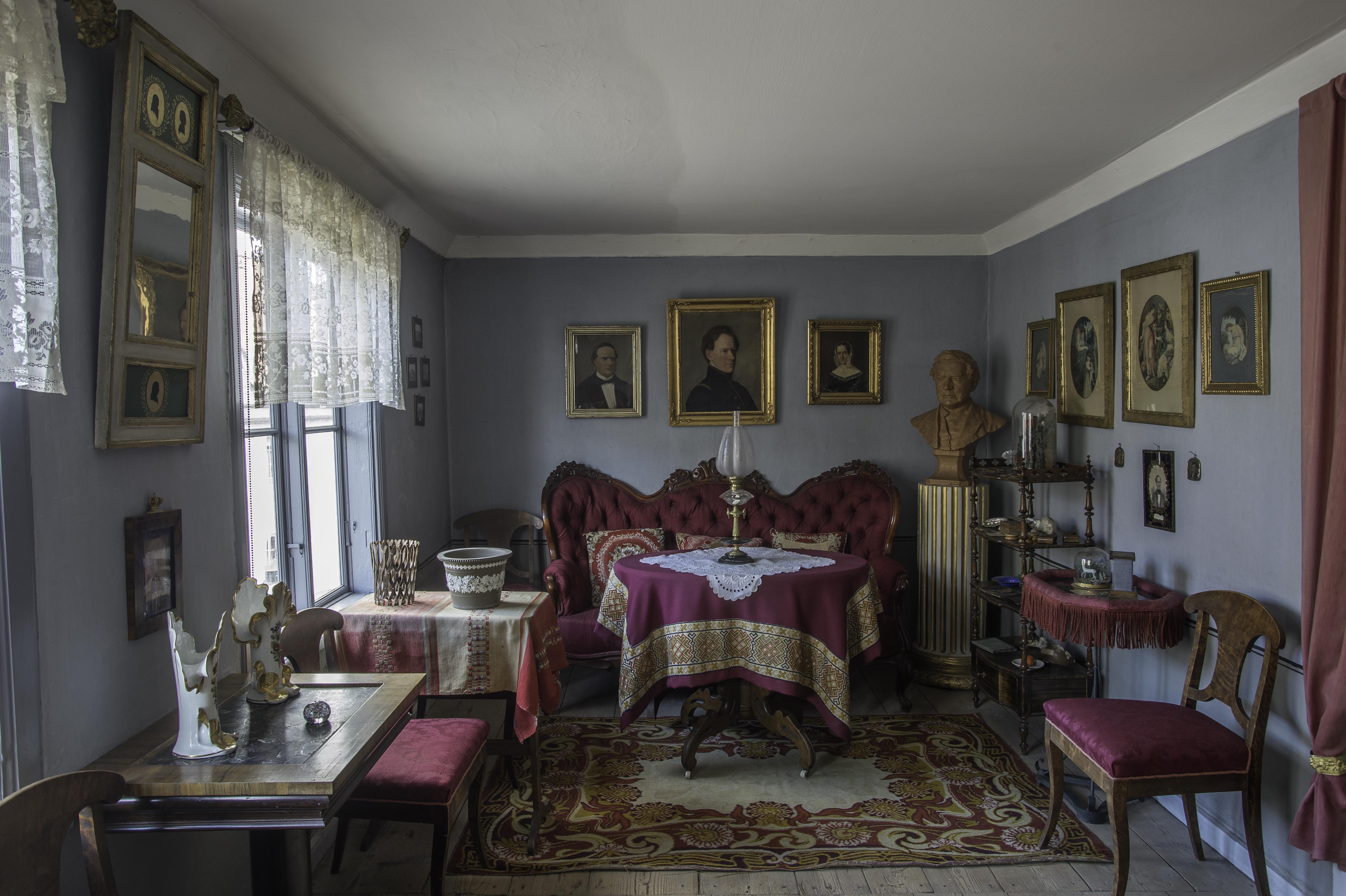
During the 18th century and most of the 19th century, there was not much difference between a farm in the country and a farm in the city. Many different buildings also belonged to a city farm. At Onkel Adamsgården there is a wagon shed with a cellar, a stable with a haystack and magazine, a wood shed, a goat pen and an outhouse. In the garden stands a simple gazebo. All buildings are red-coloured wooden houses. Their use may not be quite the same today, but they are still around and are piled up in rows. The residence is probably from the 1790s. On the upper floor there is today a museum apartment with furniture and decorative items that have belonged to Carl Anton and Hedda Wetterbergh. The apartment was furnished as a museum in 1927.
Garden
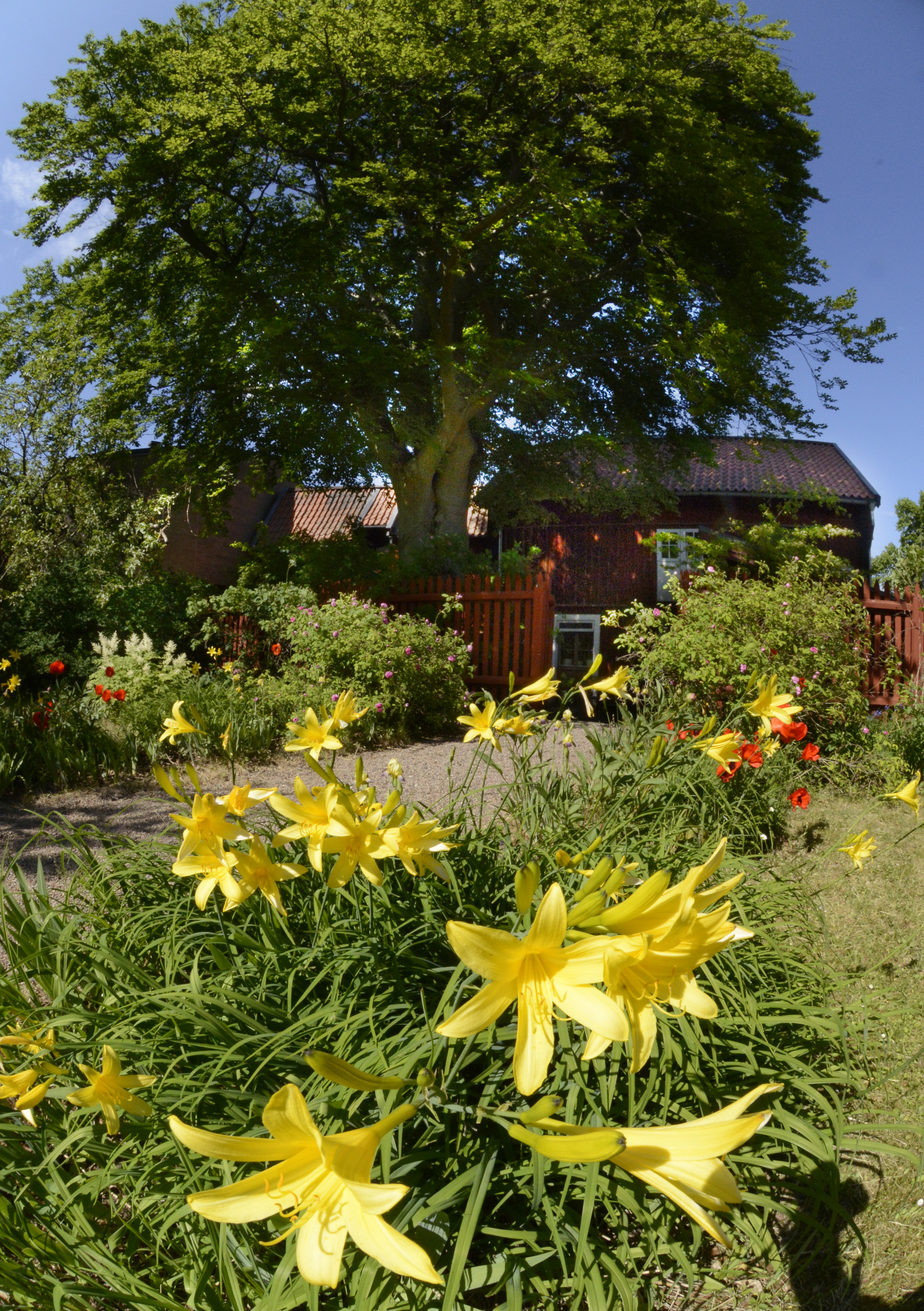
Growing vegetables, fruit and berries used to be an important part of livelihoods, even for city dwellers. Several of the owners of the property on Hunnebergsgatan were interested in gardening. Perhaps the interest primarily concerned the garden's usefulness, but the garden also gave peace. We know that from such things descriptions written by visitors to Onkel Adam.
The garden was restored in 2002 – 2003. After a garden archaeological survey, it was decided how the gravel paths would go and where the gate would be placed. There was also a drawing from 1929 that could be used. The central aisle is lined with flower beds and along some of the side aisles there are berry bushes. There are fruit trees in the flower beds and among the berry bushes. Perennials and roses have different ages and historically not all of these plants were here at the same time. The garden nevertheless broadly reflects an older urban garden.